North Korea Modules

These instructional modules are designed as an instructional resource for students to analyze the complex geopolitical and internal dynamics of North Korea, the Democratic People's Republic of Korea, through four distinct lenses: geography, economics, history, and civics. By utilizing diverse primary sources—ranging from economic data and political philosophy to propaganda art and defector testimonies—the project challenges students to apply high-level social studies skills such as spatial analysis, source evaluation, and evidence-based argumentation. Ultimately, the project aims to provide students with a nuanced understanding of how ideology, economic systems, and authoritarian control shape both the lives of North Korean citizens and the country's position on the global stage. These instructional modules provide a multi-disciplinary exploration of North Korea, focusing on its political, economic, and social structures.


The World History Digital Education Foundation offers below a set of free resources for teachers to incorporate lessons on the geography, economics, and history of North Korea. The Learning Module is composed of 4 modules:

  • Module 1: Geography
  • Module 2: Economics
  • Module 3: History
  • Module 4: Civics
3 people in stylzed stylized drawing

Module 1: Geography

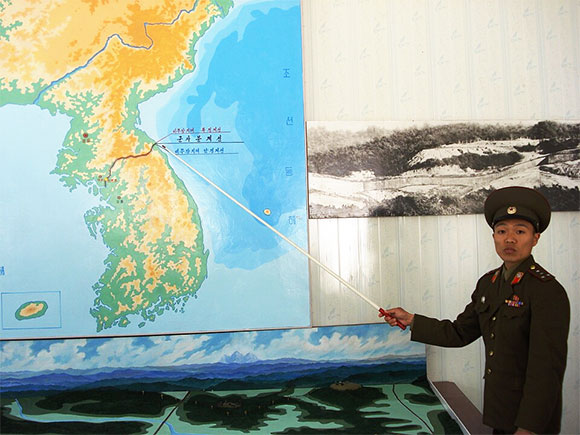
This module introduces students to the concepts of centripetal (unifying) and centrifugal (divisive) forces. Students first analyze these forces within the United States before applying the framework to the Korean Peninsula to understand why it remains divided and what challenges exist for future reunification. The lessons culminate in an assessment where students take a formal position on the future of the Korean Peninsula.

man pointing at map of Korea

Geography Day 1

Google Doc | Word | PDF

Geography Day 2

Google Doc | Word | PDF

Geography Day 3

Google Doc | Word | PDF

Module 2: Economics

Students explore the three major global economic systems - Command, Mixed, and Market - by analyzing data and charts from various countries. They use an economic continuum to classify the United States, China, and North Korea, ultimately evaluating how a nation's economic structure impacts its level of democracy. The module also introduces World Systems Theory as a way to synthesize and transfer their learning.

chart of North Korea trading statistics

Economics Day 1

Google Doc | Word | PDF

Economics Day 2

Google Doc | Word | PDF

Economics Day 3

Google Doc | Word | PDF

Module 3: History

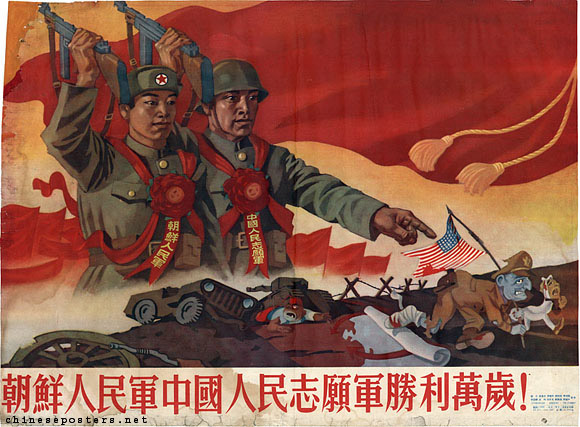
This module focuses on how states use art and propaganda to legitimize and consolidate authority. Students learn about Marxism, Socialist Realism, and the North Korean philosophy of Juche (self-reliance). They apply these concepts to analyze various media, including revolutionary songs, posters, and North Korean comics (gurimchaek) like Great General Mighty Wing.

Korean poster

History Day 1

Google Doc | Word | PDF

History Day 2

Google Doc | Word | PDF

History Day 3

Google Doc | Word | PDF

Module 4: Civics

Students examine the defining characteristics of a totalitarian state, such as government control of media, cults of personality, and the use of force. By analyzing primary sources and testimonies from North Korean defectors, students assess the extent to which North Korea operates as a totalitarian regime. For the final assessment, students write a policy briefing to the U.S. President recommending courses of action for U.S.-North Korean relations.

Korean poster

Civics Day 1

Google Doc | Word | PDF

Civics Day 2

Google Doc | Word | PDF

Civics Day 3

Google Doc | Word | PDF